

My wife, a college English professor with 35 years of experience, is opposed to using artificial intelligence in the undergraduate classroom. I think she’s nuts. With all due respect to Professor Know-It-All, my wife is just one more luddite terrified by the coming techno-utopia. What harm could come from letting AI take over such bothersome tasks as critical thinking, articulating one’s thoughts, or writing a persuasive argument? Just imagine how much time AI-empowered students could free up for more important activities like watching prank videos on TikTok. After all, daily screen time among college students, currently standing at just 8 to 10 hours, could stand some beefing up. Am I right, Zuck?
Then, when professors realize they’re evaluating AI-generated essays and tests, they’ll delegate grading, and eventually teaching altogether, to the bots. Think of the efficiencies gained: Before long, colleges will save millions offering courses entirely taught by chatbots. Eventually, when classes are 100-percent online and robot-taught, we can repurpose college campuses as data centers.
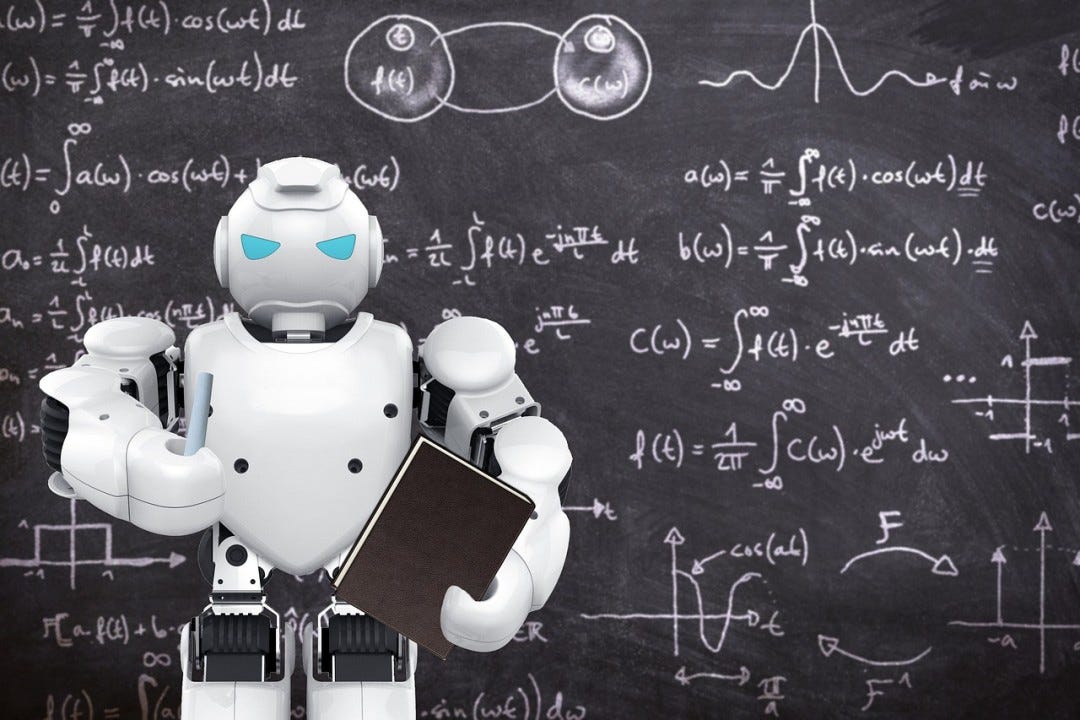
Sure, experts warn that Gen Z is the first to show lower cognitive skills than the generation before it. The “neuroscientists” making these claims point to declines in memory, attention, executive function, and overall IQ—a result, they say, of the Edtech tools that became popular around 2010. And, sure, teen mental health has wandered off Hacksaw Ridge since our last unregulated experiment with smartphones and social media. Kids aren’t having sex, either, apparently—at least not with each other. But even if this is all true, AI can fix it. Cognitive off-loading can relieve those over-burdened teen minds; and porn chatbots are just what the doctor ordered for rebuilding sexual confidence cratered by PornHub.
We need to focus on the future here. Parents are justifiably concerned their kids might graduate without having critical AI skills, because, you know, having ChatGPT identify key themes in Wuthering Heights (asking for a friend) requires advanced training. Parents aren’t worried their kids will graduate as uneducated morons possessing zero soft skills; they’re worried they won’t find jobs feeding data to their new Large Language Model overlords. Integrating AI into every aspect of campus life is, consequently, imperative: AI in the classroom to, well, do the learning for kids. AI in the bathrooms to evaluate how much toilet paper to use. AI at the cafeteria to choose between sushi and chicken tenders. The efficiency gains are endless.
I, for one, am super stoked about this techno-utopia coming to campus. Now if my wife would just get on board.
“Bot” sounds rather like”Huns.” This new iteration of AI(a term my son says is already out of date)raises the question of “soul,” both of the creators’and AI’s. I don’t believe that any agent of AI could capture the nuances of satire as well as James Hill does in his timely essay. In keeping with the literary allusion, who is the monster? Swift would have so enjoyed the bold satire of this article.
I am the Professor represented in this piece of wicked satire. I stand behind all that "All of That" has to say and to conclude in this darkly funny rant. Well done. Probing and spot-on.