

I tried to rescue a hawk today. The bird died just minutes before the scheduled hand-off to a local wildlife rehabilitator, which explains why I say, “tried.”
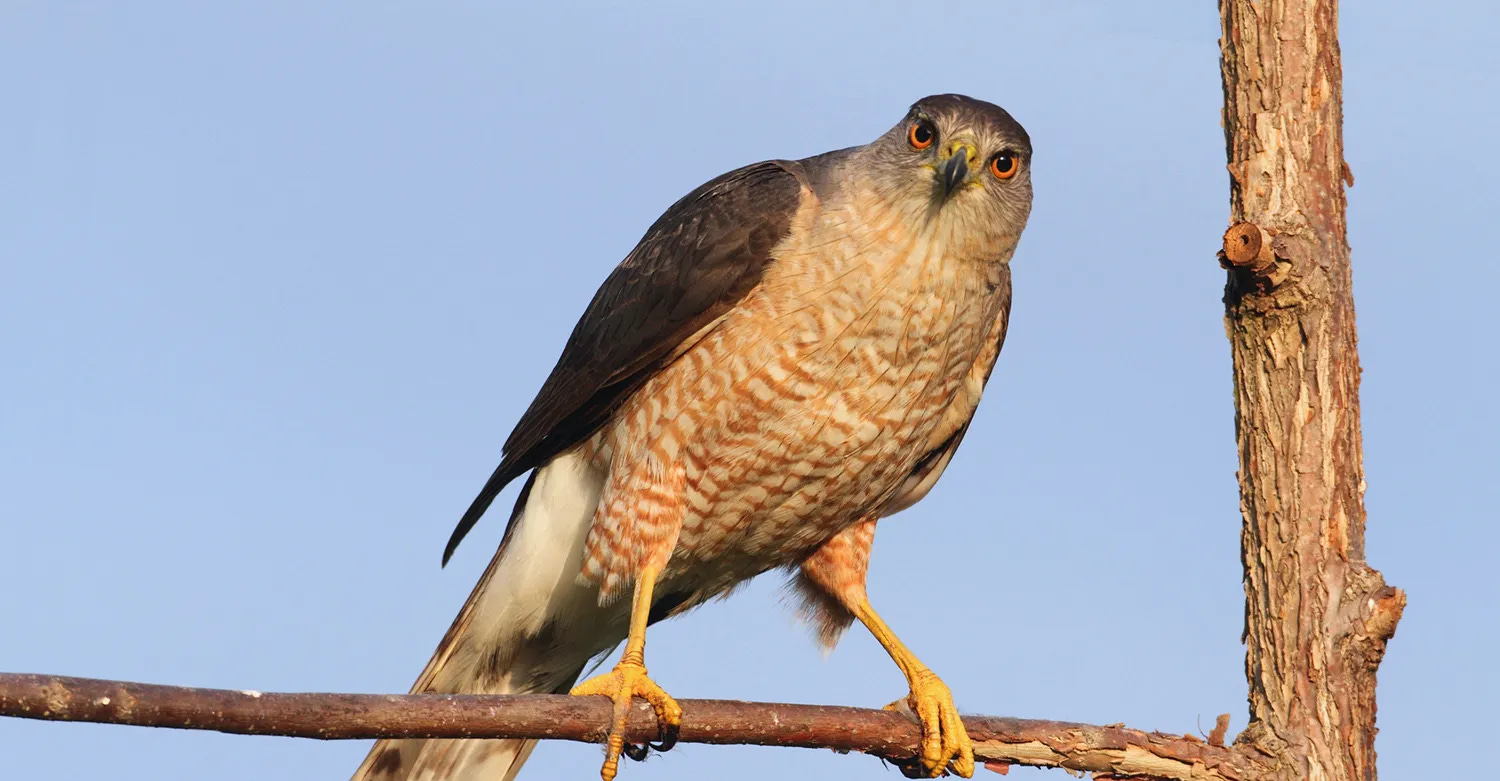
“It’s a Cooper’s hawk,” the rehabilitator said as she inspected its flaccid little body, “very plump and otherwise healthy-looking.” Then, after further inspection, she added, “Oh, his mouth is full of blood. He must have been hit by a car.”
When I first came across the hawk—just two hours before it died—the bird startled me by fluttering from the snow-covered ground to the top of a nearby SUV. Marlo, my Saint Bernard, was just as startled as I; though when I paused to study the hawk for signs of injury, he grew impatient to resume our walk.
In no position to help at that point, I made a mental note of where I’d seen the bird and decided to return later without Marlo. When I did return, I found the bird lying face-down on a heap of snow—strangely composed, utterly still, but clearly alive. By that time, I’d contacted a local wildlife rescue network for instructions and had come with a beach towel and laundry basket to effect my rescue. Once I had the patient swaddled in terry-cloth, I gently placed it in the basket and returned home, my immediate objective to get it out of the cold. Every few minutes I peered inside the basket and saw that the bird was still alive, the white and russet feathers of his chest rhythmically rising and falling. Then, just before I received further instructions from the rehab network, the little hawk stopped breathing.
Later, after leaving the bird with the rehabilitator, I called my daughter Mattie to tell her the bad news. “At least it was warm and safe in the end,” she said. Both Mattie and my wife Barbara are animal lovers like me, having assisted in countless family wildlife rescue efforts.
Years ago, when Mattie’s grade-school teacher didn’t know what to do with a pair of baby snapping turtles a student brought to class, we took the turtlets home, kept them over the winter, and released them in a pond that spring. We’ve stopped the car many times to move a box turtle off the road or encourage a garter snake to slither a little faster. Now a resident of Manhattan, Mattie has been known to stand guard over a stunned pigeon until it rights itself and staggers back to its comrades.
Every time I try to save an animal, though, I find myself questioning whether non-expert human intervention, however well-intended, makes matters better or worse. I tell myself that humans messed up animals’ habitats in the first place, and that we’re all duty-bound to help that turtle get back to safety. But then I think of the little Cooper’s hawk, lying in the snow on that bitterly cold morning, and I wonder if I should have left him there; freezing to death isn’t a bad way to go, they say. Yes, he was warm in the end, and protected from marauding dogs, but what if—and I shudder at the thought—he spent his last minutes disoriented and terrified?
If there’s one thing I’ve learned about human-animal interactions, it’s that animals seldom have a choice in the matter; and human choices are often misguided. We make decisions to adopt or assist animals, I am certain, prompted by uniquely human desires, whether we crave companionship or feel a need to nurture or, in more desperate situations, provide succor.
My daughter and I often laugh about an exchange we once overheard at the vet’s office. A woman clutching a cat carrier hurried in and announced that she’d rescued a lost rabbit in Congress Park, in downtown Saratoga Springs.
“Is the rabbit hurt?” asked the receptionist, clearly bemused.
“No,” replied the lady. “It was just lost.”
When the rescue woman passed by us, Mattie and I managed to peek at the animal, which looked, to us at least, like a wild (and extremely alarmed) rabbit.
We’re all doing our best to help these animals, I realize. Most of the time, we do real good, whether by adopting rescues, bringing wounded animals to the vet, or simply doting on our dogs and cats. It’s in the more ambiguous moments, often involving wild animals (but sometimes involving our own pets, such as when we must decide on euthanasia), that I question if any adjudicator is wiser or more reliably unsentimental than nature herself. As I grow older, I try to imagine how animals—immeasurably more attuned to and enmeshed in their environments than we are—would prefer things go, and then act on that. Then it occurs to me that even trying to imagine an animal’s preference is classic human overreach, and I’m left just as confused as when I first encountered that wounded hawk this morning.
This essay made me at once think and cry.
So real Jim. I still wonder if I did ok when Poppy was dying. Sigh. Beautiful post.